
Our App Practical notes from Upstate IP Voice - built for real businesses, not legacy telecom systems.
Request DemoOur App
The Hidden Cost of a Forwarding Rule Nobody Remembers to Update
A forward that made sense last quarter can still be routing revenue into a dead end today.
Call forwarding is the duct tape of business phones. It works until it does not - and when it fails, it fails quietly. No alarm. No ticket. Just a customer who hears rings into nowhere, a voicemail box nobody checks, or a personal cell that changed hands. The leak does not announce itself. It just costs you.
The hidden cost is not the feature. It is the maintenance model. Someone set a rule for vacation, a job site, or a temporary desk. Then the reason expired and the rule stayed. The system kept doing exactly what it was told. Faithful software plus forgotten intent is how revenue disappears without a dramatic outage.
Device-based forwards are especially fragile. Forward desk to cell. Forward cell to another cell. Chain enough of those and you have a scavenger hunt instead of a phone system. When staffing changes, the scavenger hunt gets worse. New people inherit mysteries. Old people leave with the only map still in their head.
The old way sounded practical in the moment. "Just forward it to me while I am out." That sentence solves today and plants tomorrow's miss. Weeks later nobody remembers who owns the rule. The desk still points somewhere that no longer makes sense. Callers get a professional greeting followed by an unprofessional dead end.
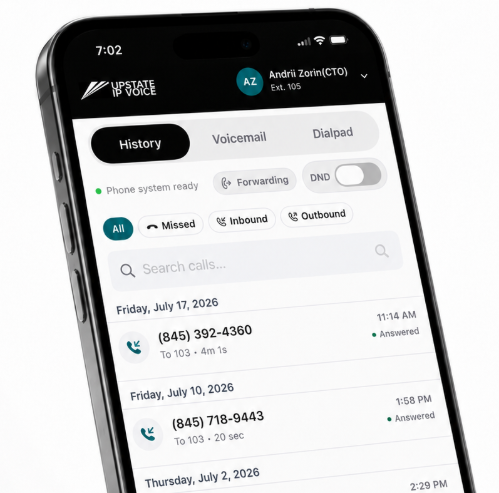
Person-based rules reverse the logic. The identity is the employee or the role - not the plastic on the desk. When that person is available on mobile, the same policy applies. When hours change, you edit one ruleset instead of hunting through handsets. The route travels with the user profile in the cloud, not with a forgotten toggle on one device.
You can spot the old model in the language teams use. "Just forward it to me." "I think it still goes to the old phone." "We fixed that once." Those sentences are warning lights. They mean the business depends on tribal knowledge instead of a living configuration. If three people give three answers about where a call goes, folklore is running your front line.
Missed revenue rarely shows up as a neat report line labeled "stale forward." It shows up as slower callbacks, customers who try a competitor, and staff who assume someone else caught the call. It shows up as personal numbers customers saved by mistake. It shows up as managers who only learn about the miss when a client mentions it weeks later.
Seasonal patterns make the problem worse. Summer hours. Holiday coverage. A contractor who covers Fridays for a month. Each change tempts another temporary forward. Without a home for rules that is easy to review, temporary becomes permanent. The calendar moves on. The route does not.
Cleaning this up is less about a heroic audit and more about changing where rules live. If forwards only exist on individual devices, they will rot. If rules live with the user profile in the cloud app, updates stick and travel. You still need discipline - but the system stops fighting you every time someone leaves the building.
A practical test: pick three people and ask where a call to the main number goes at 10 a.m., 2 p.m., and 7 p.m. If answers disagree, you do not have a communications plan. You have folklore. Write the real path down. Then compare it to what the devices are actually doing. The gap is your silent tax.
Another test is turnover. When someone leaves, how many forwards still mention them? When someone joins, how many places must be touched before their calls behave? If offboarding is a scavenger hunt across desks and cells, person-based routing in the app will pay for itself in avoided misses alone.
Replace chains with clear ring orders. Desk, then mobile, then shared voicemail - or whatever matches your floor. Prefer simultaneous or sequenced ring on one identity over nested forwards across personal numbers. Keep after-hours separate from daytime availability so a weekend exception cannot leak into Monday morning.
Review rules the same way you review schedules. When hours change, open the ruleset. When a role changes, open the ruleset. When a device is replaced, confirm the identity - not a pile of old forwards - is what still drives the call. Make the review boring and frequent. Boring means the leak stays closed.
Upstate IP Voice keeps routing with the person across desk, laptop, and mobile so you are not paying the silent tax of forgotten forwards. If stale rules have been quietly missing business for you, look at Our App and put the ruleset where your team can see it and update it. Real businesses change plans weekly. Their phone rules should keep up without a scavenger hunt.